
Neural Networks in Artwork
Neuroscience in art? One of the most beautiful things you'll ever see


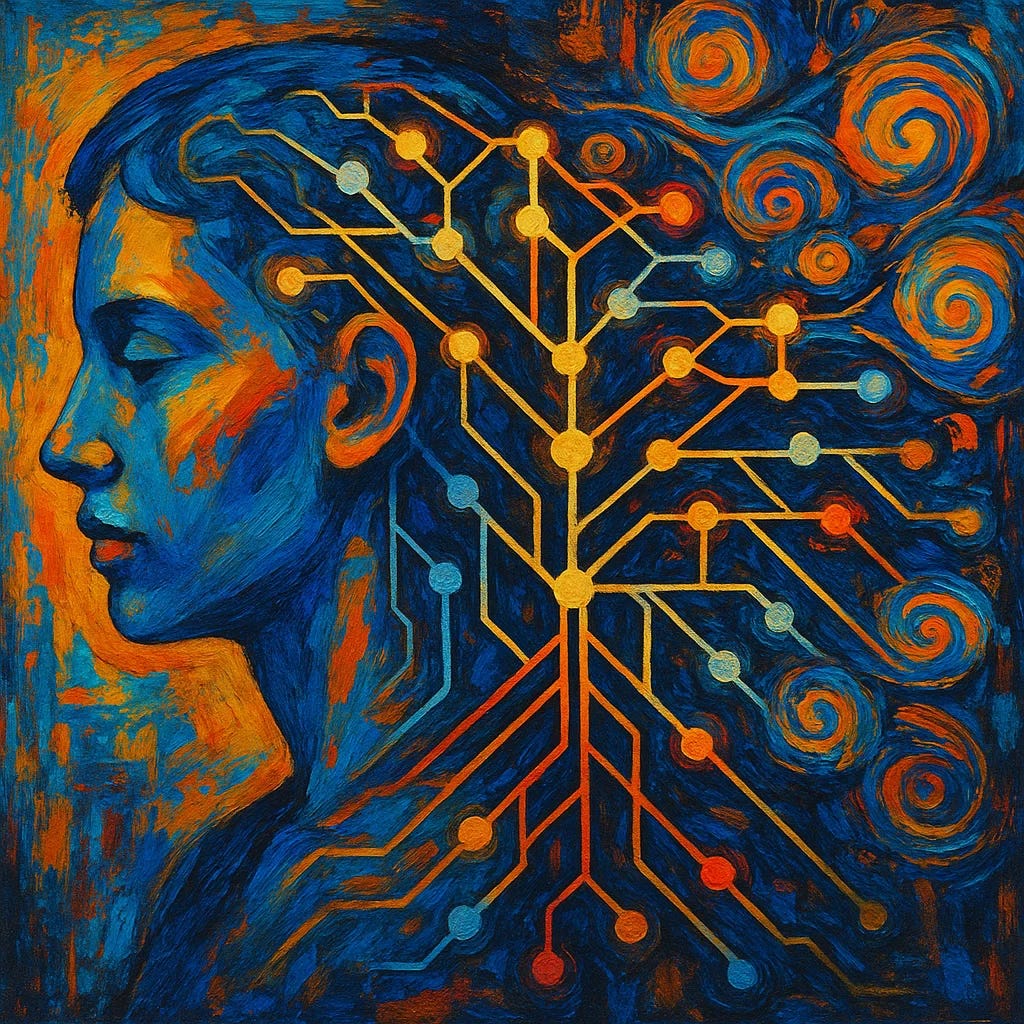
You’ve probably heard of the term “neural network”.
It’s something ingrained not just in our brains, but also in computers, which regulate different processes and allow for mind blowing things such as cognition and artificial intelligence.
While you may have heard the term more frequently in relation to AI and machine learning systems, what’s fascinating is that it is also involved in nature’s design, which affects the evolution of our brain’s architecture. Nowadays, intricate neuronal networks are mimicked in the tech we develop based on how these interconnected nodes and layers of neurons process data and execute functions for us.
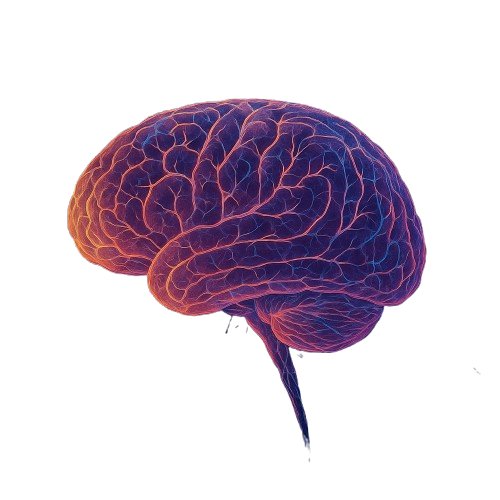
In the human brain, neural networks are composed of vast, interconnected highways of neurons with trillions of synaptic connections from which our thoughts, perceptions, memories, actions, and a million other things emerge. It’s an unimaginably complex biological meshwork of cells communicating through electrochemical signals that have somehow made us capable of things like art.
On the other hand, neural networks in computers aspire to be an artificial representation of those in our brain, modeled off of the way layers of neurons communicate across webs of interconnected nodes. These artificial networks are special in that they rely on complex mathematical models and operations that generate outputs from analyzing enormous amounts of data, but what happens when we are required to reach beyond data pools?
Neuroscience plays a significant role in so many fields—with no exception for the arts. There are numerous examples of neural networks found in artwork, such as Greg Dunn’s Self Reflected: one of the most famous examples of neural networks in art made with micro-etched metal and reflective animation that illustrates stunning visualizations of the human brain’s neural circuitry. This representation is incredibly accurate thanks to real neuroscience data provided by neuroscientist Brian Edwards. Using edging techniques and neuroscientific data, Dunn shows billions of neurons firing in shimmering, synced patterns across dynamic neural networks in the human brain.
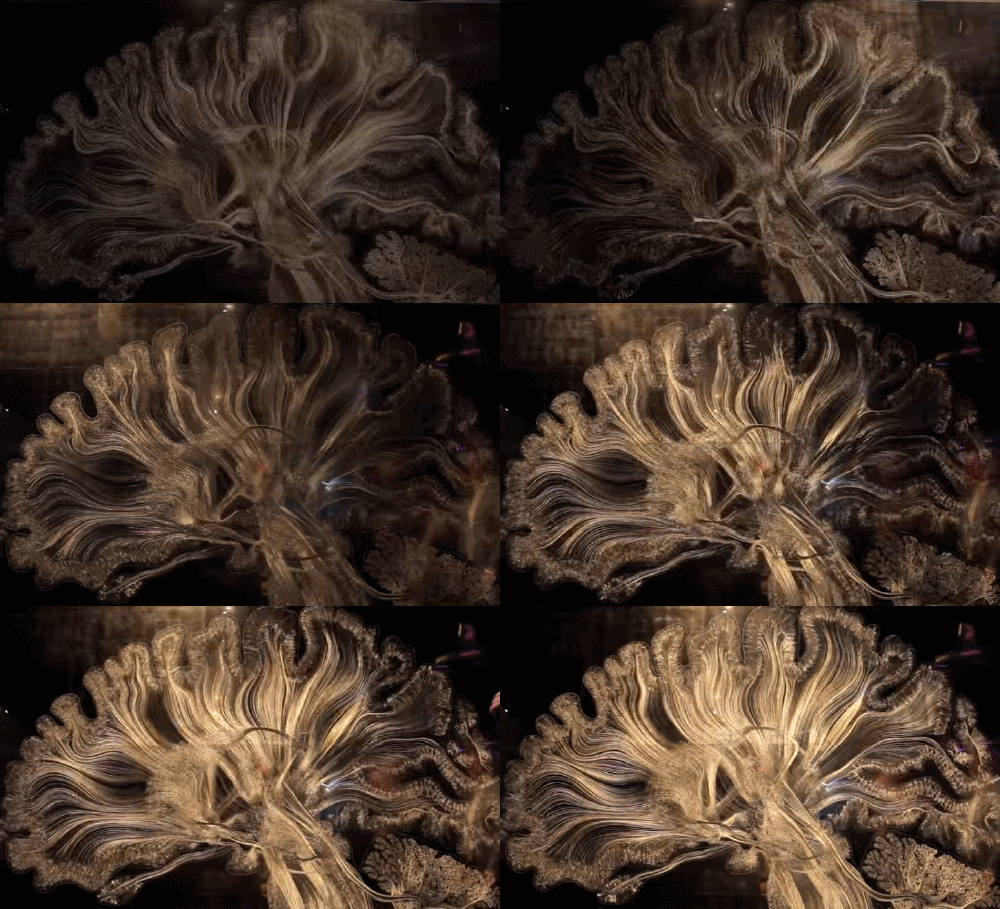
This stunning art by Greg Dunn, not only visually stunning but also based on true neural data, is just one of the many examples of neural networks in art that we’ll be delving into in Liminalis. Liminalis is born with the aim of capturing one of the most beautiful instances in nature, the merging process between art and neuroscience.
From the transformative process aimed at reaching the highest point of emotional release described by Aristotle through catharsis to early behavioral studies in primates showing evidence of commemoration of deceased mates through flowers, neuroscience has been a central evolutionary, artistic and philosophical matter. Interpersonal connections and the development of an artistic being lay at the core of neuronal plasticity. But how far does its impact travel along our axons when performing art?
Neuroaesthetics, which studies the brain’s role in experiencing beauty and creativity, is the answer to our individual and communal artistic attitude. As we walk through a museum during one of those long rainy days, our brains engage in a complex process of visual and emotional analysis. Our attention is selectively drawn to features such as color contrast, composition, and depicted movement, which activate specific brain regions involved in reward and visuomotor processing.
Yet, while waiting for a warm soup at a cafè on that same evening, we may realize we can vividly remember only two or three of the fifty paintings we saw. This selective retention happens because the brain filters and encodes artworks based on their perceived meaning, emotional impact, and visual uniqueness. A neural network model, ResMem, trained to estimate image memorability, demonstrated that paintings with specific visual characteristics are consistently remembered better by diverse viewers. These intrinsic features grab attention and are encoded more strongly in memory, making those few paintings stand out during a museum experience.
This makes us often question to what degree is our inclination towards art a personal and completely uninfluenced decision. Through Liminalis, we aim to untie the knots between the arts and neuroscience to unveil how our body and our mind relate and react to our surroundings.
peace and love
— Maria Sole & Amirali
 | A guest post by
|